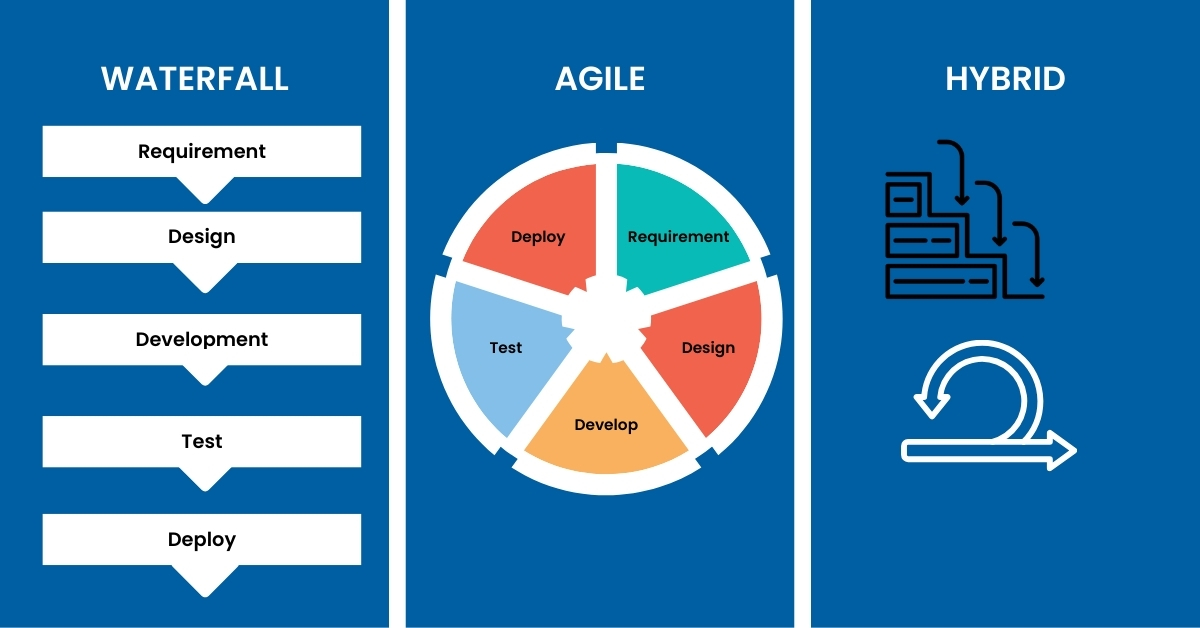
Choosing the right project management methodology is one of the most important steps in ensuring project success. Whether you’re handling software development, product launches, or enterprise-level operations, the way your projects work determines your timeline, budget, and execution quality. Today, the most widely adapted models are Agile methodology, the Waterfall methodology, and the balanced Hybrid approach.
Understanding the difference
between Agile and Waterfall helps teams pick the right strategy for
smoother delivery and improved outcomes.
Agile Methodology: A Flexible Approach to Modern Projects
Agile methodology is built for teams that need adaptability,
collaboration, and continuous improvement. It follows an iterative model where
work is divided into short cycles, enabling frequent updates and quick
responses to change.
This approach is commonly
powered by Scrum methodology, where scrum development teams plan,
build, test, and review work sprint by sprint.
Key Benefits of Agile Project Development
- Allows fast and incremental agile
development
- Encourages customer involvement
- Makes it easier to adjust project goals as
requirements evolve
- Supports frequent releases in the agile
software development life cycle
Challenges in Agile Implementation
- Requires active stakeholder participation
- Budgets and timelines may fluctuate
- Teams need experience in agile methodology
project management
Where Agile Fits Best
- Project for management involving continuous updates
- Agile methodology software development
- Innovation-driven products
- Fast-growing startup environments
Waterfall Methodology: The Classic Structured Approach
The Waterfall approach
is a linear, step-by-step model that follows defined stages. Teams complete one
phase entirely before moving to the next.
This method is ideal when a
project has fixed scope, clear goals, and predictable outcomes.
Why Choose Waterfall Methodology?
- Clear and detailed project planning
- Easier budgeting and scheduling
- Ideal for large-scale and compliance-focused
projects
Where It’s Not Ideal
- Limited flexibility for changes
- Long waiting periods before testing or feedback
- Difficult to adjust once development starts
Hybrid Methodology: A Smart Middle Ground
The Hybrid project
methodology blends the strengths of both Agile and Waterfall. It keeps the
detailed upfront project planning from Waterfall while adopting the
iterative delivery used in agile development process.
Why Hybrid Works
- Provides structure and adaptability
- Reduces risks in long-term complex program
management
- Allows teams to manage product features
efficiently
Best For
- Enterprises with mixed teams
- Digital transformation projects
- Teams using project management software
and task management software together
Agile vs Waterfall vs Hybrid: A Quick Comparison
|
Criteria |
Agile |
Waterfall |
Hybrid |
|
Flexibility |
High |
Low |
Medium–High |
|
Planning Style |
Adaptive |
Fixed |
Balanced |
|
Project Management Fit |
Dynamic projects |
Stable projects |
Large cross-functional
projects |
|
Tools Used |
Agile project
management, scrum development
tools |
Program management
software |
Task and project
management software |
Choosing the Best Methodology for Your Project
Ask yourself:
Are your requirements likely to change?
- Yes → Choose Agile or Hybrid
Do you want predictable cost and time?
- Yes → Choose Waterfall methodology
Do your teams require structure + flexibility?
- Yes → Choose Hybrid
Do you need advanced resource management?
- Hybrid or Waterfall works well for resource
management in project management
Do you rely heavily on digital tools?
- Agile teams benefit from task and project
management software
- Waterfall teams benefit from program
management tools
Examples from Real Projects
Agile Example
A development team building
a mobile app uses agile project development with sprints to release
updates quickly.
Waterfall Example
A construction company
follows the waterfall methodology for a project with fixed materials,
timelines, and regulations.
Hybrid Example
A company upgrading its
enterprise CRM uses Waterfall for planning and Agile for technical execution
using agile project methodology.
Final Thoughts
There’s no perfect method
for every situation. Agile methodology, Waterfall approach, and Hybrid
models each bring advantages depending on your project’s complexity, size,
and level of change.